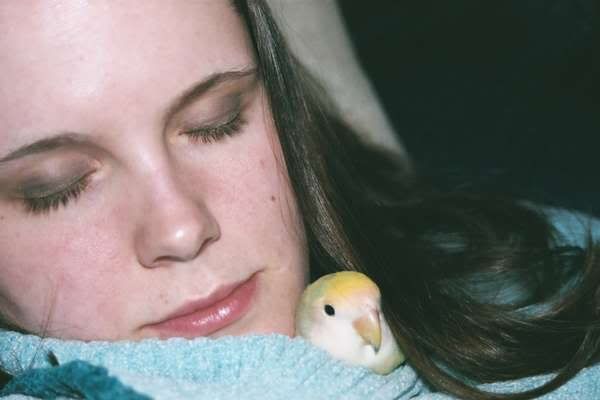
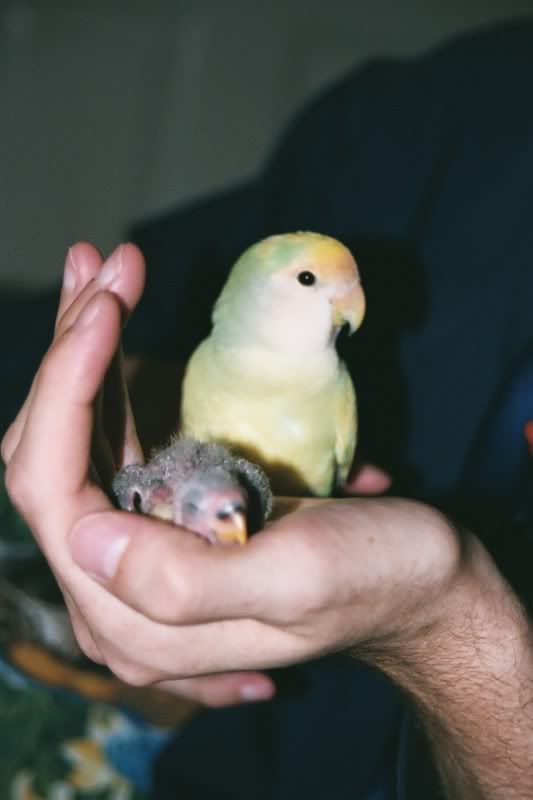
Welcome!!!
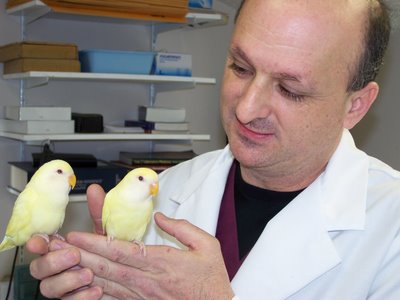
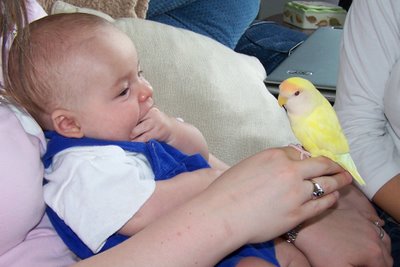
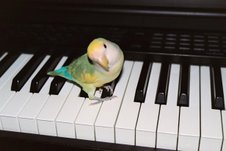
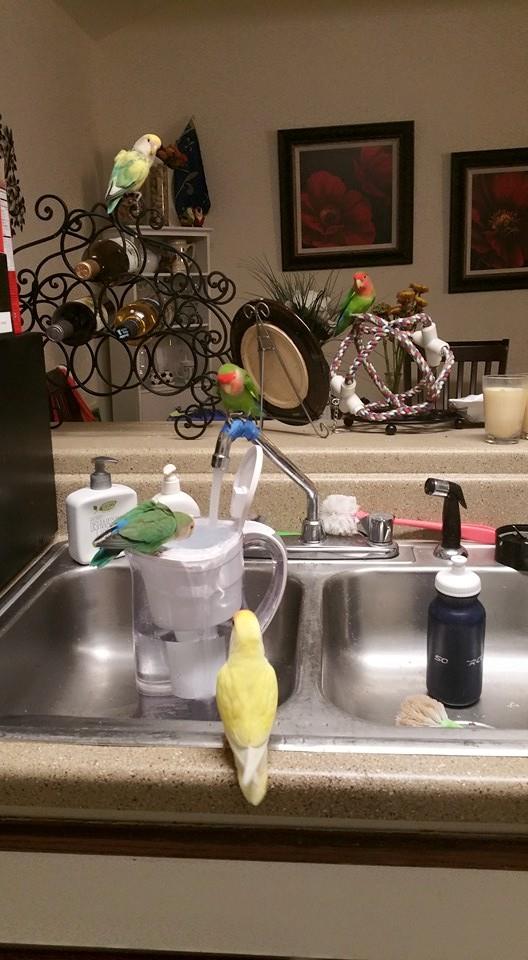
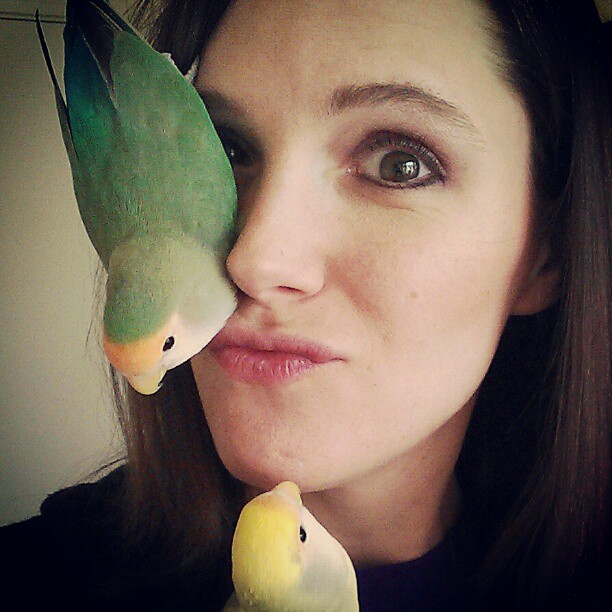
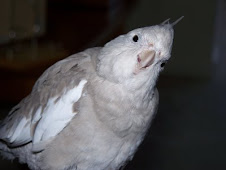
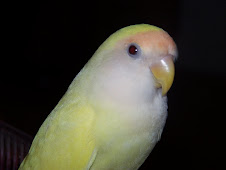
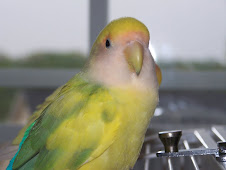
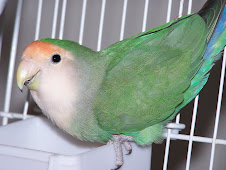
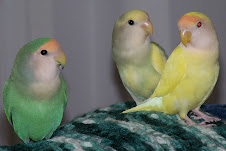
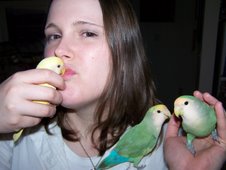
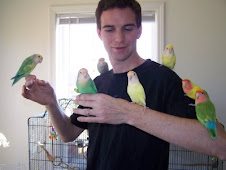
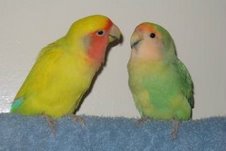
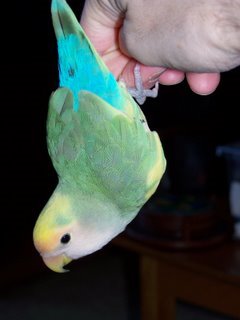
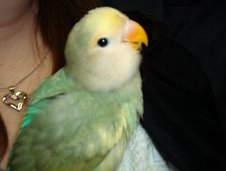
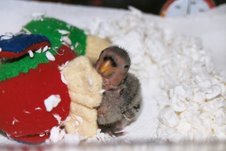
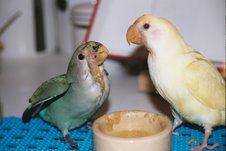
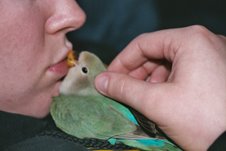
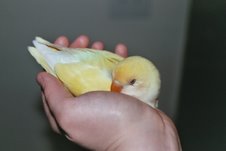
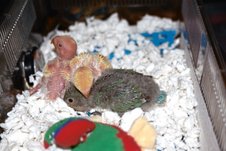
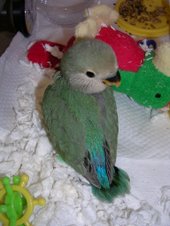
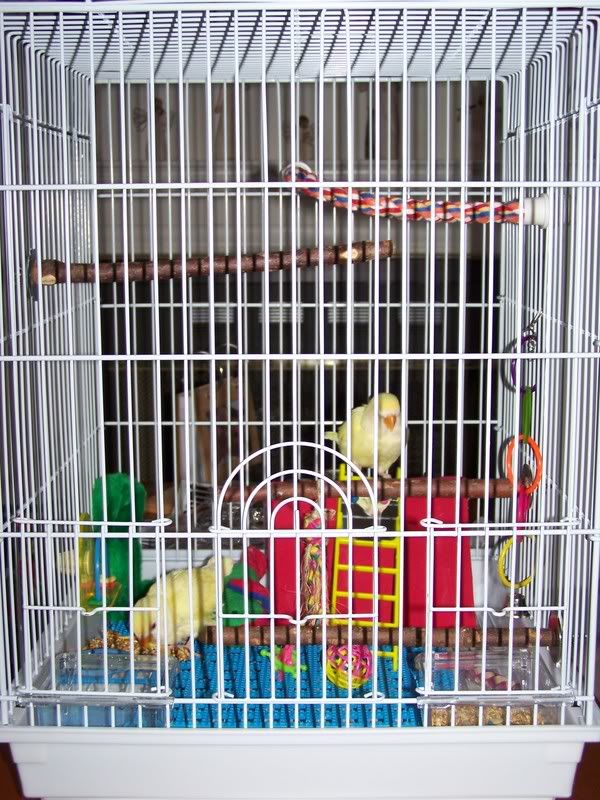
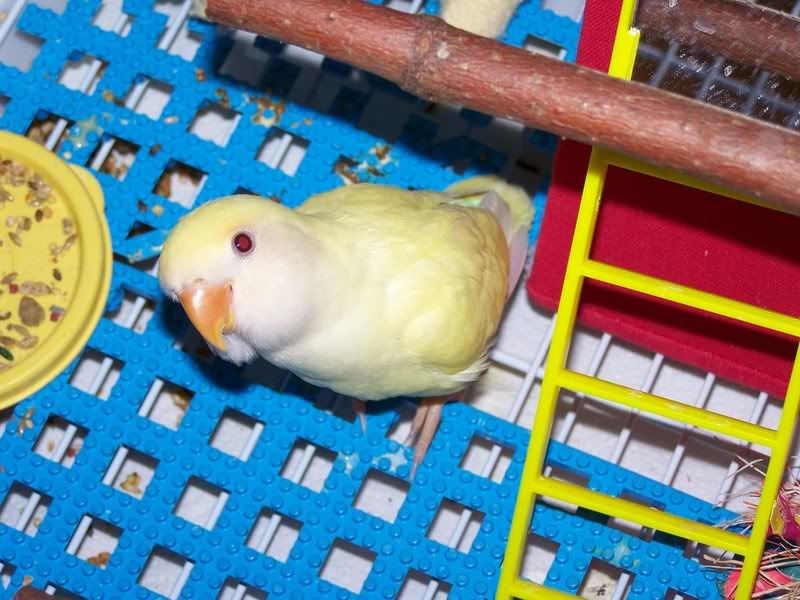
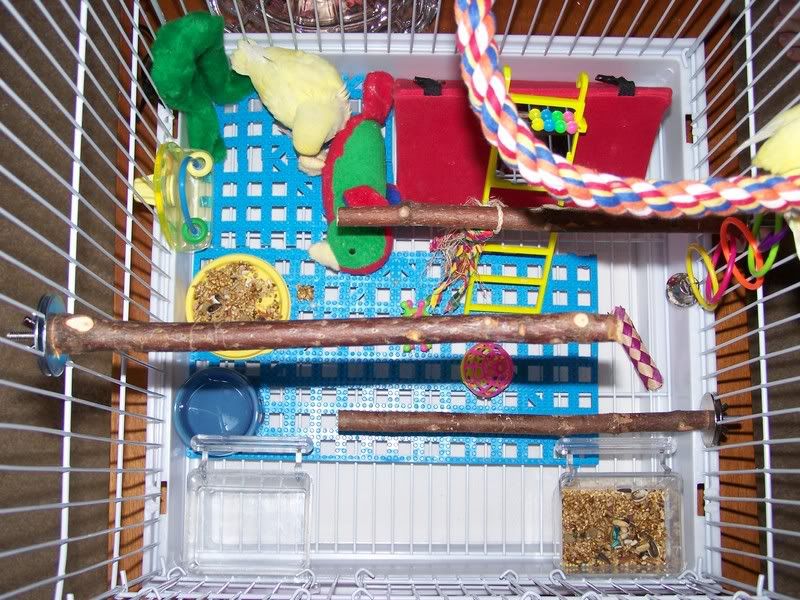
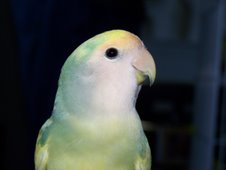
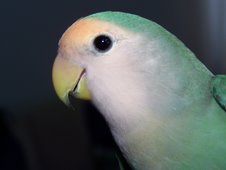
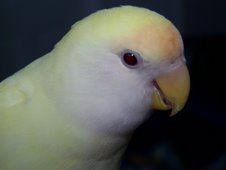
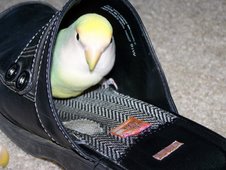
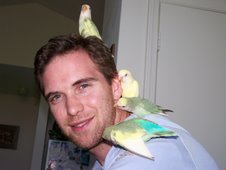
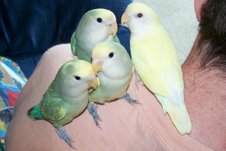
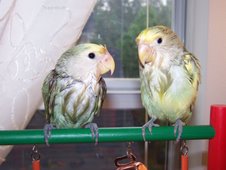
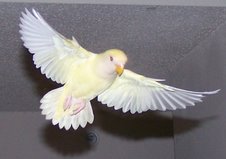
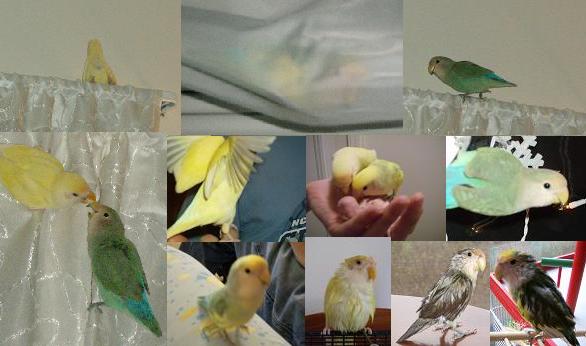
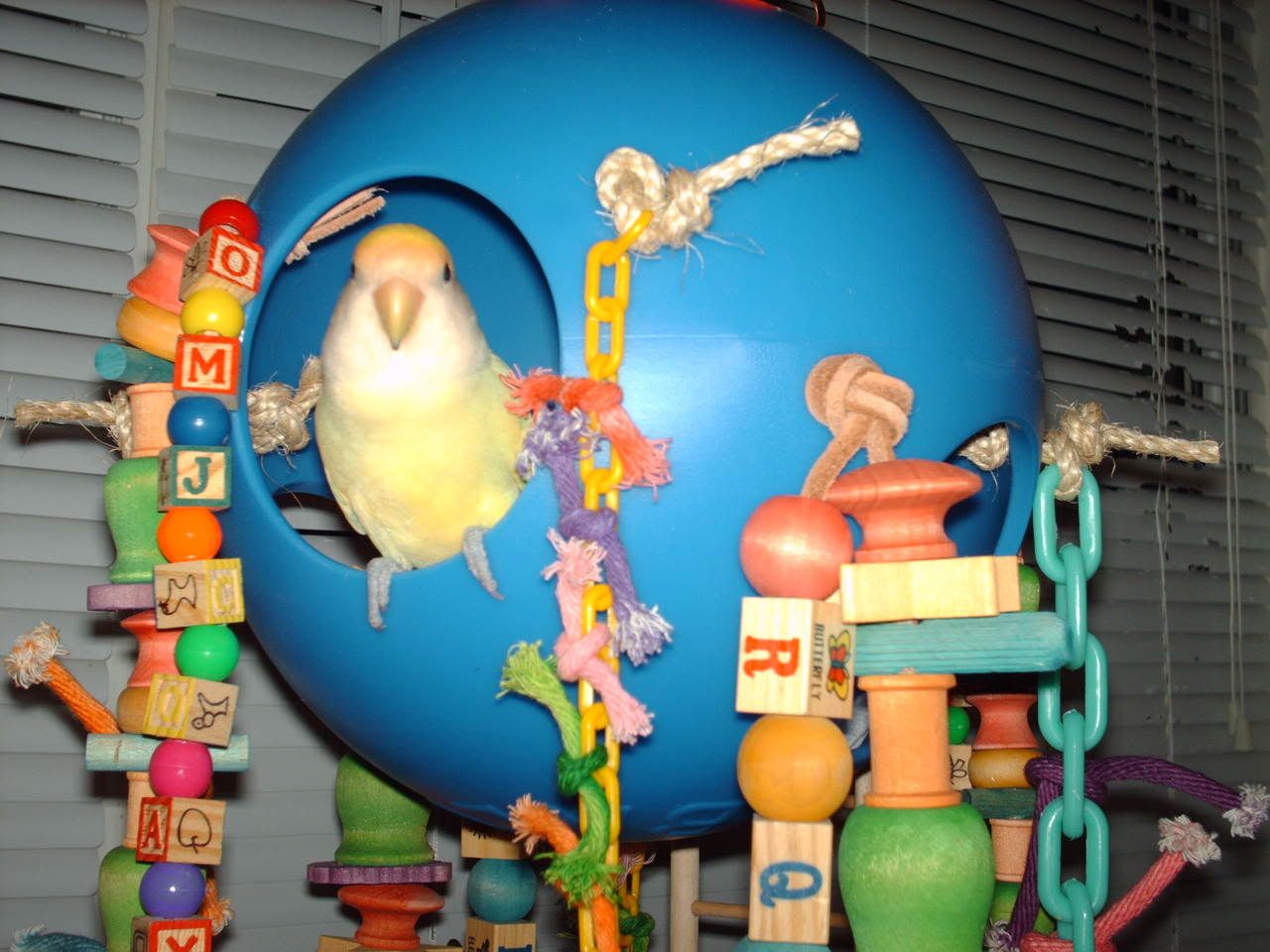
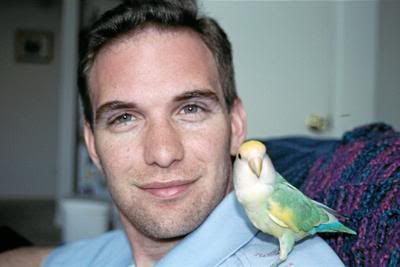
We are the owners of an awesome E-Bird store (stuff for all birds of all sizes!) and Lovebird Aviary and in which we raise and sell lovebirds in Winston-Salem, NC. Our birds are quite popular because of their temperaments and socialization. Our dear Angel passed away on July 30th, 2007. We have two pairs of breeders now, so a variety of colors are available. If you are looking for the sweetest lovebirds to become a part of your family.... you've found them! Contact us for more info.
Availability:
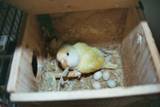
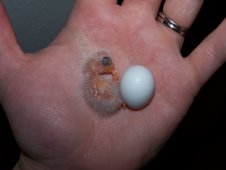
C&M: 5 eggs!
Check out more pictures and stories by clicking on "Older Posts" at the bottom of the current posts!
About our lovebirds:
Where People Get Their "Pet" Birds
Here are the options in the USA where people get their pet birds. I did not include shelters and second hand opportunities though; just where you would be more likely to find a parent-raised or handfed baby. Also, I will explain their level of tameness of the birds, care, the knowledge of the people who either work or run the establishments, and any other thing I can think of.
1. Large, retail petstore chains: (ex. Petsmart, Petco, Pet Supermarket, and other franchises, etc.)
This is the absolute worst place you could find a bird to call your own. Both Petsmart and Petco get their birds from the Kaytee Preferred Birds program which has two facilities located in Florida. They are also establishing one in Las Vegas. Of the two in Florida, one handles parent-raised small birds such as finches, budgies, and lovebirds which they buy from various mass production breeders, and one that mass produces larger parrot species for intention of handfeeding. All the breeders and babies are fed a medicated diet that includes vitamins and minerals, as well as antibiotics including Doxycycline for bacteria growth. The great use of these antibiotics will weaken the immune system and make the future successful use of antibiotics questionable. Kaytee does not care about the emotional development of their birds since they already have a contract with Petsmart and Petco stating they need to produce a quantity of chicks and not a quality of chicks to keep up with the high demand of sales. All the birds are shipped from Florida or Las Vegas, so you might as well be buying a wild-caught bird from Africa, Central and South America, or Australia. These birds are then quarantined for three days or put out on the floor when stock gets low. The stock room where the birds are quaranteed is a poorly lit dungeon only having human contact during feeding and cleaning. When at the store the birds are fed a very poor seed diet which leads to fatty liver disease and death (so with their weak immune systems, the stress of being shipped, and fatty liver disease, people wonder why their parakeet from Petsmart died in just a week?) The birds when placed out on the floor, especially the smaller birds, are cluttered together in cages with improper food, perches, and little to no toys. The so-called "experts" are usually teenagers in High School or college who could not tell the difference between a cockatoo and a macaw. The only time the birds are handled is if a customer is interested, because the employees and their employers do not want to risk damaging their merchandise. Handfed babies are fed Kaytee Exact Handfeeding formula which is hard to digest in the bird's crop. Employees and Employers are not worried about socialization of the babies; their only concern is to feed them as quickly as possible so they can bag up more fish, the true highest profitable merchandise, for customers. The only way to stop this travesty of mass production of chicks is education to the public to stop buying birds at retail pet centers.
2. Local Small Business-owned Pet Stores:
The knowledge of the staff varies greatly depending on the expertise of its people. Even with a very knowledgeable and educated staff, it is near to impossible to socialize each and every bird and care for their emotional needs. Employers and Employees have their minds preoccupied with cleaning cages, feeding birds, stocking, handling accounts, and simply dealing with customers; because first and foremost, it is a business. Many pet stores handfeed their own babies, but even the best bird stores forget that they need to continue socialization and establish a constant routine of playtime after they wean. Pet stores is where I see the vast majority of sweet, handfed babies turn wild after weaning.
3. Large-scaled Breeders:
Very similar to the suppliers of babies to the large retail pet chains. Large-scaled breeders mass produce large amount of babies for profit. So unless they have a staff that dedicates their entire time to feeding, playing, and socialization, the emotional needs just can not be met simply due to the sheer numbers of birds. These breeders are contracted to pet stores, other breeders for future stock, and other clients to provide a quantity of birds for future or present profit. Not all large-scaled breeders have inhumane practices. Steve Hartman of Hartman Aviaries and Gail Worth of Aves International not only care about their babies, but also the wellbeing of their parents also. Large-scale breeders also have the means to establish breeding stocks that could develop the possible domestication of parrots through line breeding. Also, mutations and other genetic changes could be studied in a more controlled environment.
4. Small-scaled Breeders (like us):
Many of these breeders are hobbyists, though some can make a living and breed for profit. These breeders tend to have a intimate relationship with each baby that they raise. This intimacy could lead in studies of developing co-parenting. Personally, I believe that this is the best place to find a new, loving feathered family member as long as the breeders breed in a moral way with not only thinking of the wellbeing of their babies, but also their parents. Small-scaled breeders tend to keep their pairs within their homes unlike large-scaled breeders who breed in either large flight aviaries or warehouses.
Things We Have Learned as Birdie Parents:
Toys, Playgrounds, and Foraging for Parrots
1. Destructible toys that appeal to a parrot’s instinct to chew. These toys include: branches with bark, finger traps, bird candy, milled wood, chipped wood, straw, cholla, cork, leather, paper, jute, hemp, weaved palm leaves, etc.
2. Sound-related toys for the instinct to communicate. These toys include: bells, stainless-steel or nickel-plated liberty bells, metal pipe bells, plastic pipe bells, rattles, and clackers, bird music boxes, sound-repeating devices, and any toy with resonating properties from plastic, paper, or metal cups.
3. Interactive toys for the bird’s intelligence or emotional needs. These toys include: beads, puzzle toys, foraging toys, snuggling or comfort toys, hiding or peeking-out toys, surrogate enemy toys, foot toys, and mirrors.
4. Exercise toys for physical activity. These toys include: swings, appropriate perches, platforms, playgrounds or trees, and boings.
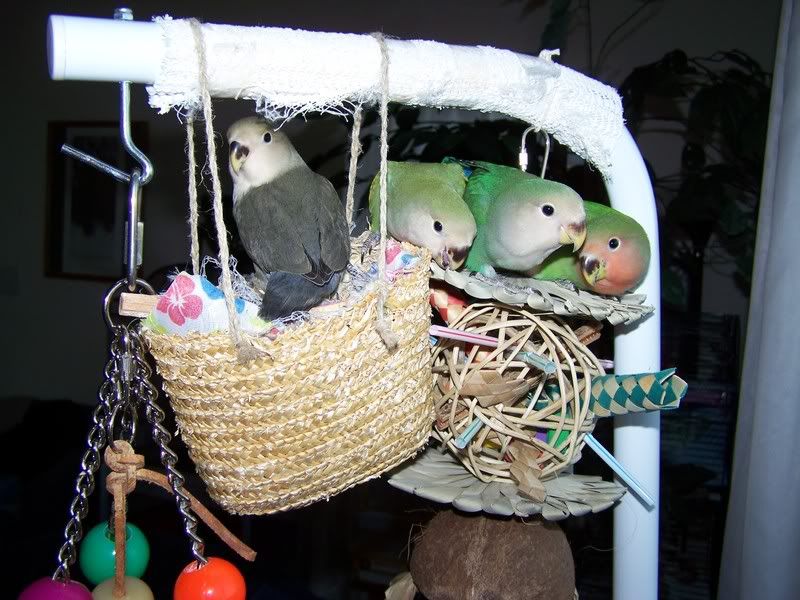
Foraging is simply the act of finding food. Very simple in definition, but great in the impact it can have on the lives of our birds. Having our parrots work for their food is one of the best stimulations that we can provide. It does not matter if you have a budgie, lovebird, amazon, or a macaw, behavior problems will diminish if a parrot has the opportunity to forage for their food rather than eating straight from a bowl. In the wild, a parrot will occupy 60%-80% of their time searching for food. During their mission, a parrot will fly, use problem-solving skills, and manipulate their environment to find that prized morsel. This is a very heart-wrenching revelation considering our parrots, according to recent scientific studies, on the average spend only 15 minutes eating from their bowls and the rest of their time waiting for us in their cage for eight hours while we are working. Our beloved birds want more and deserve more. Our feathered friends have provided richness, stimulation, beauty, and love in our lives; should we not also provide them with anything less? A parrot needs to work for their food to stimulate both body and mind; their health will reap from the benefits also. Providing foraging opportunities is more work on our part, but the rewards are far greater with the antagonists of our selfishness. As our Avian Veterinarian Dr. Burkett states, “We put them in cages, the least we can do is provide the absolute best for them.”
5. Foraging opportunities for parrots include, but are not limited to, the following: natural foods and treats such as nuts, Nutri-Berries or Avicakes; foraging toys made specifically for birds; shredded paper, paper towels, or toys in a food bowl; supervised foraging on a playgrounds, trees, toy boxes, or baskets; hiding treats wrapped in carrot leaves or dark leafy vegetables, placing food in pinecones or stuffed in children’s toys such as a small dartboard from the local dollar store; taking treats and arranging them in the cage in a sheskabob; shreddable cardboard boxes with hidden treats; wrapping treats in paper and hanging them inside the cage, perch, or playground; placing food bowls in different locations in the cage providing several feeding stations. Wrap food in paper, paper towels, or paper bags and place in some stations while leaving others empty. Then, tape the top of the feeding stations with paper, or a destructible toy, so your parrot will first have to punch through the barrier and then remove the wrapped morsel; placing food in the holes of a cholla perch or destructible toys such as finger traps; hiding food in bird safe, untreated pine toys or cardboard boxes found in a craft store; foraging trays with hidden food and toys placed on the bottom or top of cages, playgrounds, or trees; having your parrot climb a branch, rope, or chain to his food, having your parrot lift a bucket or string to retrieve his food; sticking food in plastic waffle balls, teach flight training and retrieving, and my favorite: either hiding food in your clothes, making a birdie edible necklace, or holding your parrot’s food up high so he has to climb up you to receive his treat and the rewarding positive stimulation of his favorite sound, your voice.

As you can see, foraging is only limited to the creativity of your mind. It always “cracks me up” when my lovebirds get so excited even when they just find some pellets buried under a mass of shredded paper towels. It will take you a few extra minutes a day to set up foraging opportunities and stations, but the rewards, positive stimulation, and environmental richness will last a lifetime in the lives of your beloved birds.
~Rodney Money
If you would like to use this article, just quote us as the source! That goes for any of our articles on here!
Bird Protectors

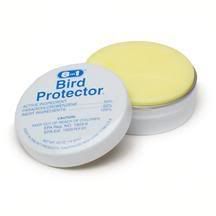
Chances are that at least once you have been browsing through the bird section of your favorite pet store and come across a product called a "Mite Protector". You may have wondered whether or not you need this product, and if it can really be beneficial to your pet's health.
A mite is a very small parasite that can infest the skin and feathers of most animal species. Truth be told, the vast majority of birds that were captive bred and have been housed in sanitary environments never experience a problem with mites or any other external parasites.
The "Mite Protectors" are usually small disc shaped containers designed to hang on the side of a bird's cage. The discs contain chemicals that release a fume to ward off mites, fleas, and other parasites -- but the fumes can potentially be harmful to the very thing you are trying to protect: your bird!
Birds have very sensitive and specialized respiratory systems, and the fumes given off by these Mite Protectors can be harmful or even fatal to them.
If you fear that your bird is experiencing a problem with mites or any other sort of parasite, the best thing to do is to schedule an appointment with an avian vet as soon as possible. Keep your pet healthy and happy by forming a good relationship with your vet and doing plenty of research on the bird products you are interested in before you use them.
Source: The Truth About Mite Protectors
My Experiences Getting Birds to Trust Me
by Rodney Money
I understand exactly what it is like to want a relationship with a parrot who doesn't want one with me. When I started my life with parrots, the majority of the birds on the market were untamed, wild-caught birds. They where just stripped from their homes and shoved into small cages in a pet store. I can still see their eyes resonating with fear in my mind. The books on "taming" gave advice like restraining them in towels or holding them with gloves so you would not get bitten. Unfortunately, even books by well-known authors today give the same advice. One thing I just read from "Parrots for Dummies" is to towel your birds and scoop them up placing them on your knees. It sounds like good advice, but it isn't. Every time I had to towel a bird, they were breathing heavily in a panic. Would this work on people or even a cat or dog? No. Cats and dogs are so called "domesticated," (even though I could argue with that!) but birds are not domesticated animals. They live by a code: flight or fight when it comes to defending themselves to live another day. In my experience with all types of species with parrots, I have discovered this one thing about taming parrots: you don't tame a bird; you get them to trust and love you.
I have worked with one of the most dangerous birds in the entire world. It was a Greater-Sulfur Crested Cockatoo named Louie. Louie was 20 years old and caught from the wilds of
I placed his cage in a soothing part of the house and at night I placed him in my bedroom. Birds sleep with their flock not predators. If a bird sees you sleeping they will see that you are not out to get them. This makes a big difference compared to you leaving them for 8-12 hours alone at night in another room and then invading their territory (the cage) in the morning. In the wild, lovebirds constantly watch out for predators or invaders from other birds in their space. When you got your lovebird, did you first hold him a lot, and then miss a few days letting him entertain himself in his cage? Lovebirds and other parrots need daily interaction so they will not only stay sweet, but also form a bond with their human. They need to feel like they need their human, their mate. If you leave the bird in its cage, he feels that he has no use for you. So, when he sees people he thinks of one thing: to defend his territory from an invader. What would we do if a strange person invaded our homes? We would freak out also. That’s what your lovebird is doing; simply defending his territory.
Evee, our 7 month old Dutch Blue started becoming very independent when he discovered his security with flight. He was like, “Why do I have to step-up when I can just fly to where I want to go? And right now, I don’t want you.” So we clipped his wings and now he loves coming to us; even when we don’t want him to sometimes. He will flutter or climb to us from his playpen. Now that he is getting his wings back, he flies to us instead of away. Clipping wings is an attitude adjustment for lovebirds. After Angel got her wings clipped, she let children pet her. Evee will defend his cage after we put him to bed at
So don’t let your lovebird ever have a reason to bite and if she does, show no reaction. Some people say tell the bird no and place it back into its cage, but that is what the bird wants in the first place. Your lovebird needs to know that its territory is not only his cage, but also in the safe parts of your house. A playpen or food and toys on top the cage will give your lovebird something to look forward to when he is out of his cage. While you are supervising him, open the cage door. If he doesn’t come out, simply take the bottom of the cage off and turn the cage upside down. Lovebirds and other parrots naturally climb up. When he comes out, see if you can slowly turn the cage right side up again while he is climbing to get right side up. Then open his door again so if he wants to, he can go back to his cage. While he is on top of the cage, give him lots of toys, food, and bathing opportunities so he can have something to do while he is on top of his cage. Remember, he needs to know that there is life outside of his cage, and that the world is fun also. If he flutters off his cage don’t go chasing after him (that is what predators do!). Either place his cage near him so he can climb up, lay down on the floor, or sit Indian style to see if he will climb on you. If he isn’t too freaked out, let him explore your home. Place some food and toys on the floor; make his world fun for him, not scary. This step might be too soon for his needs and nerves. But the goal is for him to know that his only world is not just his cage, but also you, your home, and even life outside your door. Maybe you need to start from ground zero like we did for our breeders Dewey and Sierra.

Also, here is another technique: when your baby calms down enough to perch on a T stand you could start clicker training. It is like playing a child’s game like “Hot and Cold.” Simply lay your hand on the stand on the opposite side of your lovebird. Show a treat in the direction of your lovebird. If he takes even one step, click, praise, and give him a small treat. If he doesn’t move in the direction of your arm/ hand, simply do nothing (completely ignore him). Try again keeping lessons to only 15 minutes. This is how I trained Louie after I got him to trust me in the same fashion as Dewey and Sierra. If he is bonded to his cage, his reaction is a very normal behavior. Also, lovebirds like other parrots go through a challenging adolescence stage where they challenge their humans, flock, and everything around them.
(c) Copyright Rodney Money 2008 (email for permission to use!)
The Secret of Not Getting Bit By a Hormonal, Territorial but Very Cute Female Lovie
* If your lovebird's bites do hurt the first thing you need to do is check that beak. It might simply just need grooming. It's the difference between a a person with sharp fingernails and well-groomed rounded ones. Lovebirds that need grooming will have little points on the side of their beaks that look like little vampire teeth. So sometimes, your little girl might not mean to bite you hard, it's just her beak is way too sharp.
* Establish a basic routine so surprises can be minimal. Even monthly adventures out of the home or trips to the vet become part of the routine. Routine also teaches a bird confidence. A girl with no confidence will bite quicker than a bird that is secure with her place within the flock; even if it’s just the two of you.
* Teaching tricks, having jobs, and clicker training will keep her mind sharp and she will view you as the flock leader. Birds who know tricks live to please their owners and their rewards.
* Make her forage for her food, giving her a job other than breeding.
* People feed their birds way too much. Giving a bird enough food for all day long is not natural. Birds in the wild: wake-up, fly to the feeding grounds, let their crops empty, and then fly to find more food. My birds have the same routine. They wake-up, play, then fly to their cages to eat breakfast, morning nap, play, afternoon nap, play, eat supper, short evening nap, play, go to bed at 7:30. Birds need a reason to want to go back into their cages either for food, private play, or rest.
* I am at the top of the pecking order, and my birds know it. Be bold and handle them with confidence and with rules. Our babies such as Luna, Sapphire, Mango, Starburst, and Skittles are very bold birds who can run their entire household if given a chance. When we baby sat them, they quickly learned that they can not act like they do at home. When their owners return after vacation, we show them tricks on how not to let your lovebird run your household. For example: they feed the bird way too much thus not having her to look forward to going back into her cage (I never have to chase a bird around the house to get them back into the cage), if you are holding two birds in or on your hands, hold the one you trust more at a higher level than the other. Teach the bird you are not a human playground, and you are not here to tend to their every little need and want. Not letting the bird do what they want all the time, and making them stay on your hand if that’s what you expect.
* I don’t expect to get bitten. The thought never enters my mind. You have already failed even before you have started if you think about bites. Birds can read your body language and it seems as though they can read your thoughts. My middle school music students can play compositions at a high school, lower college level because I have taught them confidence. BTW my students who have birds have never been bitten by their birds either. My birds know the “up” command, and I see nothing wrong with it. It is not forcing a bird when the bird wants to come to you anyways. With smaller birds I let them in the palms of my hands. I have seen the boldest lovebirds return to little babies by using this simple technique.
* Don’t give her the opportunity to bite, ever. In my humble experiences, biting for the most part is a learned response. The more a bird gets to bite, the more she gets to practice, and the more a bird practices the more comfortable they feel using biting to their advantage. If they bite in the cage, let them come out, if they can not be trusted in your clothes or shoulders, don’t let them in there. It’s that easy. Sierra loves to go in my clothes, but I do not let her. Also, Sierra does not use her beak anymore and has completely forgotten how to bite humans.
* Birds should have rules. I might clean their poop all day, but I am not their human slave. Only have them stay on the hand if that’s the only place you can trust them. If they bite your hand, let them only stay on your arm. Our breeders use to be scared of hands, so I had them step-up on my arm while I hid my fingers and thumb by making a soft fist. If they go anywhere else, place them back on their cage or a playground without saying a word. If she is on your hand/ arm and tries to move up, place your other hand like a high five right in front of her. This has stopped my birds in their tracts. If she tries to bite your high five hand, it is ok for you to move your hand slightly that she is standing on to distract her from trying to bite. If she knows tricks, then distract her with one of her tricks. If she continues to not follow the rules, place her on her cage or a playground without saying a word.
* Sometimes you just need to let a bird be a bird. Why does the bird have to be on you for them to be happy? Just let them play on or in their cage, or a playground, look for food, or simply interact with other birds. I very rarely go up to my birds and have them step-up on me. They play and when they want me, they fly to me. When they are finished interacting with me, they fly back into the bird room. When I actually have them step-up, they see it as Christmas and are more willing.
* Playgrounds are not an option. If she has a reason to come out of her cage, then she might have a reason to interact with you also. Also, if she is in breeding mode, let her out of that cage. Get her mind off nesting and out of the nest box, her cage.
* Let other birds teach her how to be a part of the flock. The other birds will teach her how to act around people also. Females tend to be on their best behaviors when they are not alone while on the human.
* Everything should be positive including you coming to the cage, them going back into the cage, them being on you, them being off you.
* People talk too much to their birds and get them way too excited. I have seen my lovebirds have a complete conversation from body language alone. I am actually very quiet around my flock, but when I do say something they listen closer to what I have to say. I have seen too many people talk too much baby talk to their birds and it gets them way to excited to the point where they can not even control themselves. It’s like making a child hyper because they feed off your energy. Also, your female might think you are courting her with all that “singing.”
* Withhold their favorite treat for only special occasions such as trick training, going back to the cage, or checking the nest box. When we check for babies we have conditioned our pairs to see our presence in a positive light. We gently tap the top of the nest box which is their cue to step-out and go to their food bowls. We place seed or millet in their bowls, place a napkin in the nest box's hole, and continue to check their babies. After we remove the napkin, the parents return with a full crop to feed their baby some much needed energy and fat stored in the seeds.
* Clicker training: First click and then give her a treat showing her that the clicker is a promise for reward. Once she understands this, you can move forth to basic and then advanced training. If the female is not interested in stepping-up readily, lure her with her favorite treat and make her lean for it forcing her to walk on your hand. When she does something you like, "Click and Treat." It's like playing a game of hot and cold. If she is hot, click and treat, if she is cold do nothing. Here is a video of Piper and Bailey, Trinkets grandparents!
* Be careful you are not pushing her to do too much. Open beak stance, with possible swaying, is not a good thing. She probably feels threaten and unsure with your presence. Put her in a place in the home where she can see the family activities and get used to your presence. Do not sneak up on her or surprise her accidentally frightening her. Hold her in the palm of your hand if possible. Your palm is warm and soothing to birds, plus they feel that they are back in the nest.
* Concerning cage placement, shy and nervous birds benefit with having one or two sides of the cage being next to a wall. The best thing we ever did for Cody and Mia was placing their cage near the corner of the bird room. Their confidence has grown to new levels since then and they interact with us more.
* Never ask her to step-up with just one finger. You might as well be pointing rudely to her just like if you were pointing at a person. Either use the open palm technique or ask her to step-up while your hand is in a horizontal 4 pattern parallel to her body. When she first starts her baby molt, she will most likely start rubbing her head gently on your fingers. Then you can start by preening her head with the fingers on the hand that she is standing on. This is how you teach small birds to enjoy being preened. If she allows touching already, place your chin on her back. Even with my adult birds, when they are in the palm of my hand I will place my chin on their back then kiss their little heads. This is a very soothing motion to babies because this is what Mommy bird does with her beak in the nest to soothe her little ones.
* Between three and four months your lovebird will go through a beaking phase. It is very much like a teething stage in infants, but it doesn’t hurt. This stage has its pros and cons. It is a great time to introduce new foods and toys, but baby will also start to beak your fingers. Never let him have the chance to develop this habit or he will carry it out for the rest of his life. As soon as he starts to beak your fingers, place a chewable toy such as Bird Candy or Chinese Finger Traps in his mouth. He is looking for negative attention. Simply ignore him with no reaction, calmly say no, and give him something to demolish. You have to explain this to other people visiting your bird also; even if they say they don’t mind the nibbling. The nibbles will turn to bites after six months of age if you don’t intervene then. Lovebirds are as smart as a two year-old child; they will test you. With some discipline and consistency from your part, your baby will pass this testing stage in less than a month.
* It's alright to get females mates. A tame male will teach the female how to be tame also. She will follow his lead.
* Females are not being mean; they are trying to be great mothers. Once we understand that, we will be able to live a more peaceful coherence together. Know when she will bite, and stay 2 steps ahead of her not letting her “practice” biting.
Feeding Schedule and Socialization Goals
2 weeks old: 5 feedings every 4 hours (8:00am, 12:00pm, 4:00pm, 8:00pm, 12:00am.) Many other breeders only feed 4 times every 4 hours the first week, but we do not want the babies crying for food in the middle of the night. Just like human babies, there are small babies (Pixy!) and there are large babies (her brother Jelly Bean!), so the amount of food is going to vary around 3.5-4.5 cc’s. Tamara and I do not say, “Ok baby, you have had 4 ccs, your full!” No, we fill up the babies until their crops resemble a full balloon or when they simply do not want anymore. Feed the babies all at once; competition is your greatest ally. Well-socialization goal: babies should recognize you, have a wonderful feeding response, and have names.
3 weeks old: 4 feedings every 4 hours (8:00am, 12:00pm, 4:00pm, 8:00pm.) Just fill those crops until they look and feel like a full balloon. At 3.5 weeks old, the babies will start to chew on their bedding. This is the time to introduce “big bird” food. Fresh, chewy Avicakes are the perfect introduction to solid food. Avicakes are highly nutritious unlike seed or millet. After babies are fed baby food, place a very small crumb into their mouths. This works great as a birdie pacifier also. We never feed them mashed-up or soft foods for weaning. Starting them on what they will eat as adults is best. After they are eating “big bird” food, we introduce small foot toys and toys they can shred. Well-socialization goal: babies try “big bird” food, recognize your voice, and step-up on your palm to be fed.
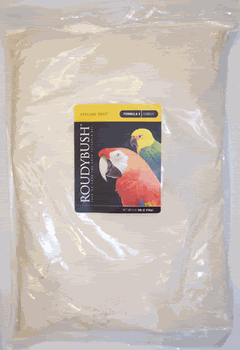
4 weeks old: 3 feedings every 6 hours (8:00am, 2:00pm, 8:00pm.) We never drop their feedings to three until we know they are eating the Avicakes on a regular basis. This is the time when we introduce crushed-up Nutri-Berries and a small pellet like Roudybush Crumble. Depending on the size of the baby, they should be receiving around 6 ccs at this point. Once again, feel the crop and if the babies refuse, do not force them to eat. After we feed them baby food, we place them over the solid food bowl. This is the time we introduce a small dish of water also. Well-socialization goal: babies play with toys, eating adult food on a regular basis, and cry out not only for baby food, but for attention also. Some of the older babies at this point have a natural protective instinct of their siblings and territory, so to dilute this trait we lay down on the floor, cuddle, play with them with their toys, and feed them adult food by hand after each feeding. When they have fallen asleep, we place them back into the brooder.
6 weeks old: 1 feeding per day at 6:00pm or 8:00pm (babies can feed from 7-10 ccs at this point.) If we have a large clutch, 4 or more babies, the prodigies will normally wean during this week. Well-socialization goal: babies are filling up on adult food in the morning, babies want to come out of their weaning cage to fly, cuddle, and most importantly play with toys independently on a playground. Babies should never be on a person all the time when they are outside of their cages. They have to learn independent play and have foraging opportunities.
7 weeks old: A baby should wean at anytime now. If they do not cry for their evening feeding, then do not give it to them. At 7 weeks, we introduce cooked foods, fruits, sprouts, and veggies. The babies will see the adults eating the food and will follow their lead. Many breeders and pet stores separate their babies in individual cages so they will not bond with each other. This is one of the worst things they can do for a baby, especially one that has not weaned yet. Birds need that competition of the food bowl, thus learning to eat on their own and whenever food is presented. Lovebirds that also learn to compete for food will naturally compete for your attention also thus making trust issues virtually nonexistent. Well-socialization goal: the babies step-up from inside their cage, and the babies are excited to see you. Babies need a reason to want to come out of their cages such as a playground. That, plus routine, is the key to a well-socialize parrot and not one that is caged bound and only finds security in the confounds of their bars.
8 weeks old: Weaned. If you decide to clip, never clip a bird before they wean or they might not ever see a reason to get off the baby food. This is nature’s way: stop begging, get off Momma’s fat baby food, and fly! Even though socialization starts as early as two weeks, true socialization actually starts the week babies wean. Too many times we have seen and heard stories of birds that were handfed, but they turned wild. It happens during this week. The babies no longer need you as a source of food, so you need to show them that they still need you for other reasons: love, another source of fun, security, and socialization. During this week, most birds forgot you ever handfed them. All handfeeding does is that it gets a bird use to the presence of humans. So during the week your babies wean, the most important thing any of us can do is to continue a balance of training, positive reinforcement, cuddle time, and independent play. Why is a well-socialized parrot such an important goal? The simple answer is because they will live with people. If a bird is truly trust worthy, affectionate, and socialized, then chances are their humans will see them more than just birds in a cage, but as true family members. Thus, living a full and enrich life in a human household. Well-socialization goal: babies enjoy a great head rub and have first full vet check from an Avian Veterinarian.
~Rodney Money True Love Aviary


(919) 322-9334 (between 9am and 5pm EST)
336-608-9546


5 comments:
I want all of them!!!
Hehehehe! They are super cute.
That first picture is SO ADORABLE! Your babies are the cutest things I've ever seen! I wish I could take one of the Jewel babies home :)
aww i want to come over and play with the pretty birdies!!
Come over then!!!
Post a Comment